Tools · Customers & Retention
Which Customers Actually Make You Money
Your biggest customer is not necessarily your best one. One of them might be costing you money.
$34 one-off
Buy — $34Which-Customers-Actually-Make-You-Money.xlsx · 5 tabs, 325 live formulas, no macros
Instant download, nothing ships. Works in Excel, no subscription. If it does not do what you needed, tell me and I will make it right.
Every business ranks its customers by revenue, because revenue is the number on the invoice. Almost none ranks them by profit — because the cost of serving a customer never appears on any invoice at all.
It's real, though. The phone calls. The site visits that came to nothing. The re-quotes. The rush deliveries. The discount that got negotiated. The ninety days they take to pay.
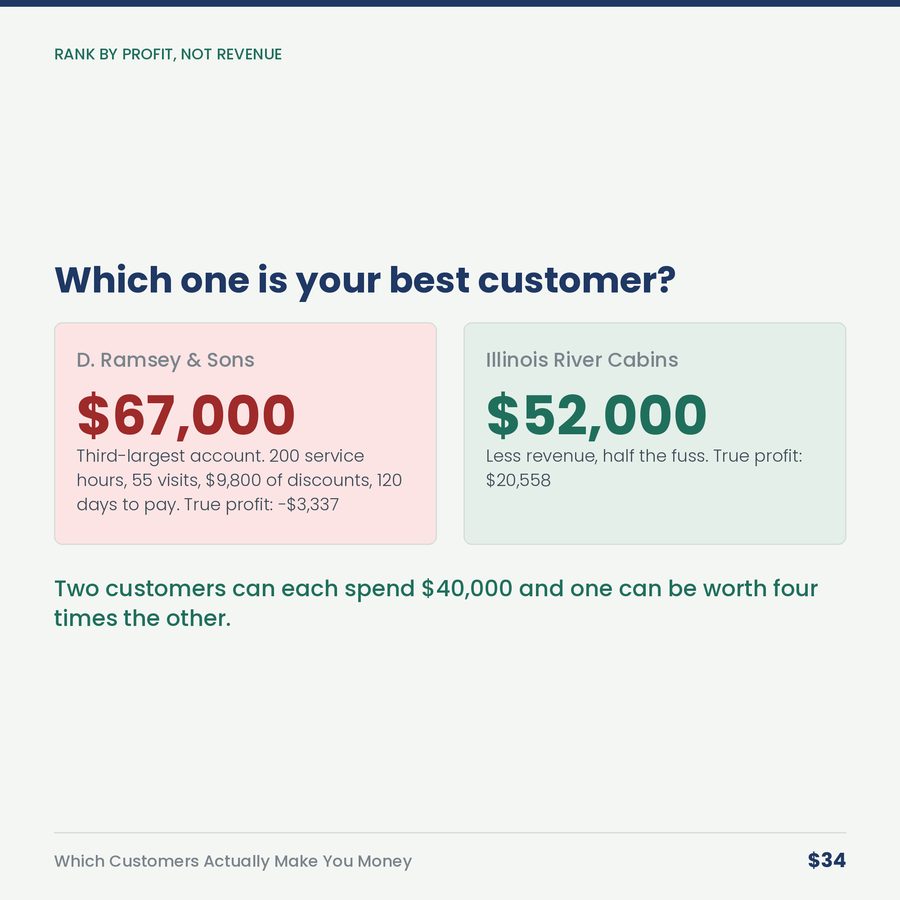
Two customers can each spend $40,000 with you and one of them can be worth four times the other.
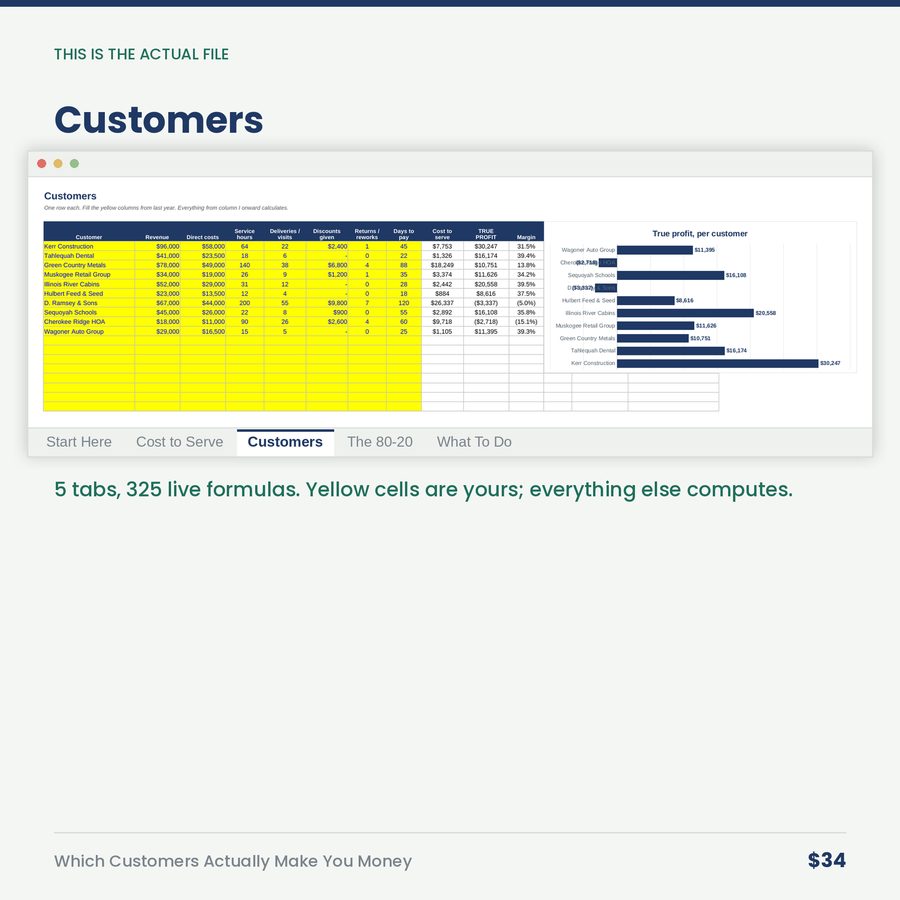
Here's the example loaded in this file.
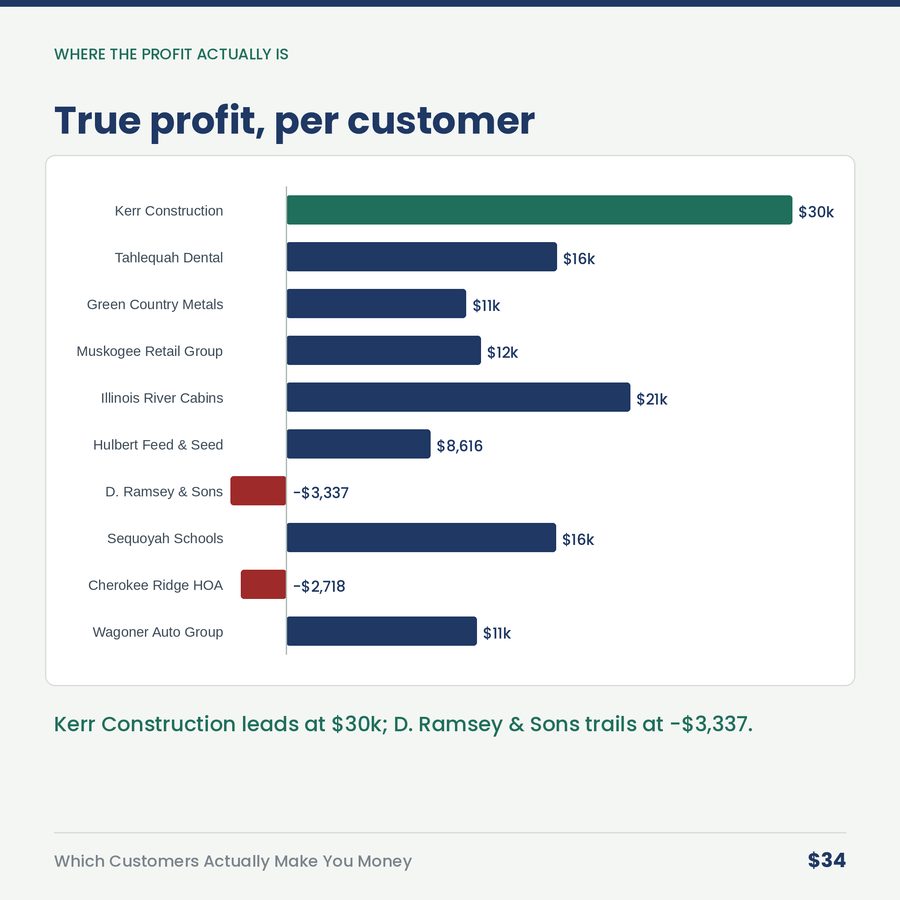
D. Ramsey & Sons spends $67,000 a year — the third-largest account in the book. Two hundred service hours. Fifty-five site visits. $9,800 in discounts. Seven reworks. A hundred and twenty days to pay on thirty-day terms.
True profit: negative $3,337.
Illinois River Cabins spends $52,000 — less revenue, half the fuss.
True profit: $20,558.
Same business. Same year. Which one would you rather have two more of?
How it works
Set five numbers once: what an hour of service or admin time actually costs you, what a delivery costs, your cost of money, what a rework costs, and your standard payment terms.
Then one row per customer: revenue, direct costs, and the four things that quietly consume profit — service hours, deliveries, discounts given, and days to pay.
The workbook returns each customer's true profit, their real margin, their rank, and which group they fall into:
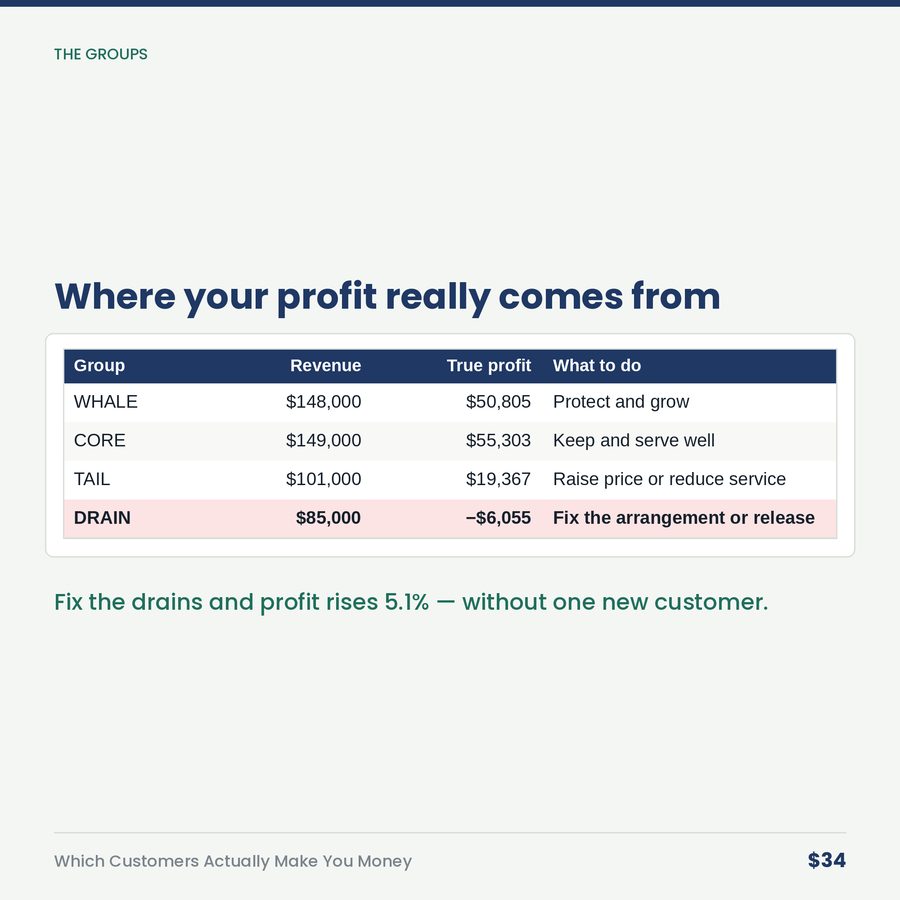
WHALE — top 20% by profit. Protect and grow. CORE — the next 40%. Keep and serve well. TAIL — profitable but small. Raise price or reduce service. DRAIN — negative. Fix the arrangement or release.
And it charges customers for something almost nothing else does: the money they hold beyond your terms. Someone on 30-day terms who pays in 120 is borrowing from you for ninety days, interest free. That's a cost, and here it shows up against their name.
What the 80/20 tab tells you
In the example: whales are 30.6% of revenue but 42.5% of profit. Two drain customers carry $85,000 of revenue and destroy $6,055 of profit.
Fix those two — no firing, no new customers — and total profit rises 5.1%.
Before you fire anybody
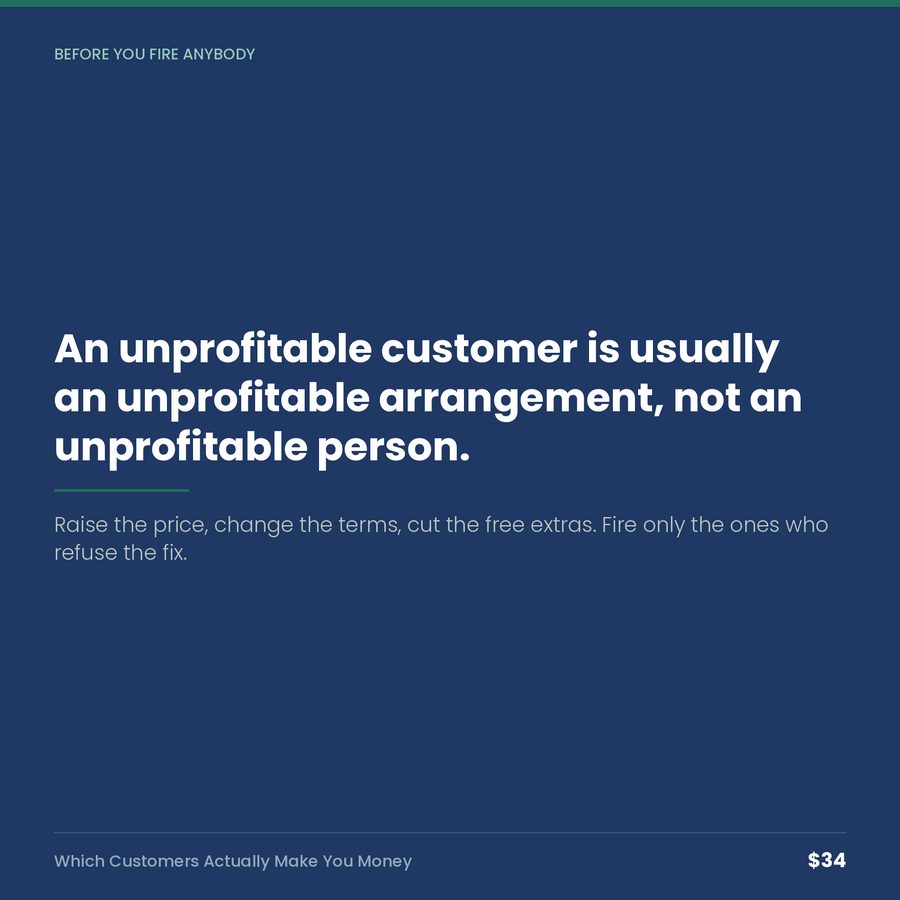
An unprofitable customer is usually an unprofitable arrangement, not an unprofitable person. Most can be fixed: raise the price to where it should have been, charge for the extras they get free, change the terms and mean it, or match the service level to what they actually pay.
Nearly every owner who runs this analysis finds two or three customers who become fine the moment somebody has an honest conversation with them.
And the workbook gives you the words:
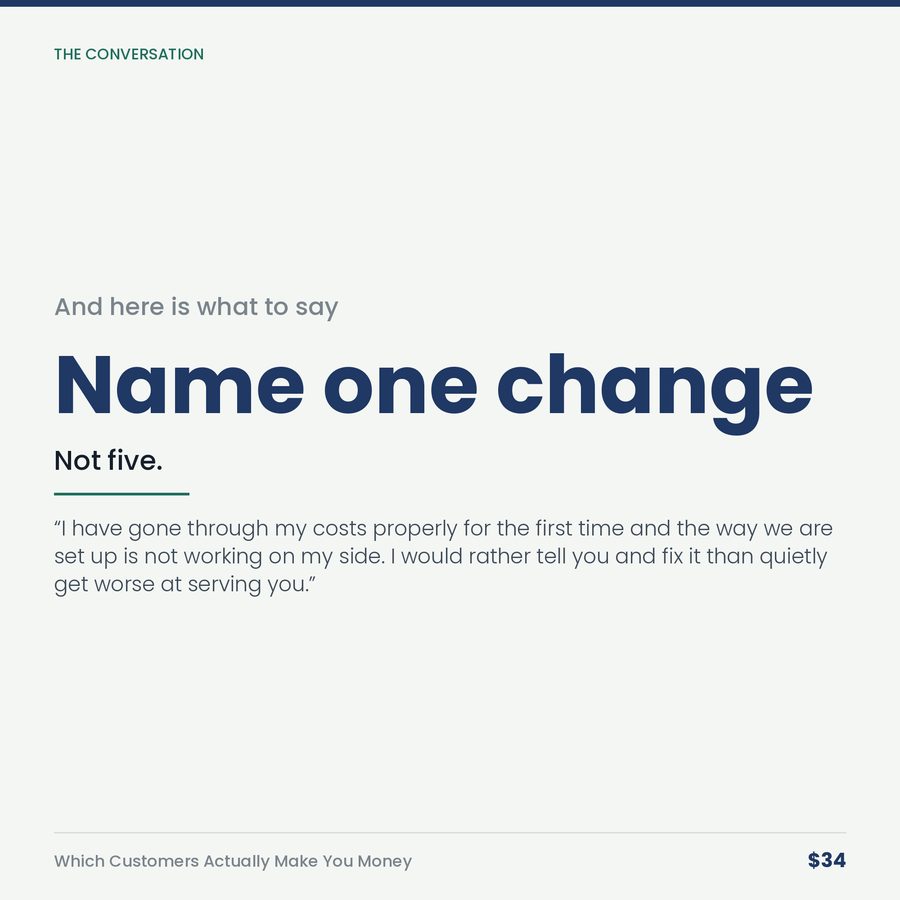
"I've gone through my costs properly for the first time and I've found the way we're set up isn't working on my side. I'd rather tell you and fix it than quietly get worse at serving you. Here's what I'd need to change."
Then name one change, not five.
Most of these conversations end well. The customer doesn't know what they cost you, and a fair number of them are quietly aware they ask for a lot. Being asked directly is a relief more often than it's an offence.
The ones that end badly were going to end anyway. You just found out this year instead of after another year of losing money.
Built for
Contractors and trades · agencies and consultancies · wholesalers and distributors · clinics and practices · anyone with more than ten customers and a suspicion that some of them are more trouble than they're worth.
What you get
One .xlsx file, five tabs, 50 customer rows, instant download. Excel, Google Sheets, Apple Numbers, LibreOffice. No macros, no add-ins, no subscription.
Ten realistic customers are already loaded — including two that lose money. Type over them.
A look inside
More in Customers & Retention
Customer Retention Value Calculator
You count the customers you win. Do you count the ones you quietly lose?
$32
What Would a Maintenance Plan Be Worth?
Money that arrives on the first of the month, whether or not the phone rang.
$34
Should I Take This Big Customer?
They'd be a third of your business. The margin is squeezed, the terms are net-60, and they can leave in 30 day
$29