Tools · Customers & Retention
What Would a Maintenance Plan Be Worth?
Money that arrives on the first of the month, whether or not the phone rang.
$34 one-off
Buy — $34What-a-Maintenance-Plan-Is-Worth.xlsx · 6 tabs, 35 live formulas, no macros
Instant download, nothing ships. Works in Excel, no subscription. If it does not do what you needed, tell me and I will make it right.
That's what a maintenance plan actually sells you. And it changes three things at once, which almost nothing else a small business can do manages:
Cash becomes predictable. It changes how you plan, how you hire and how well you sleep.
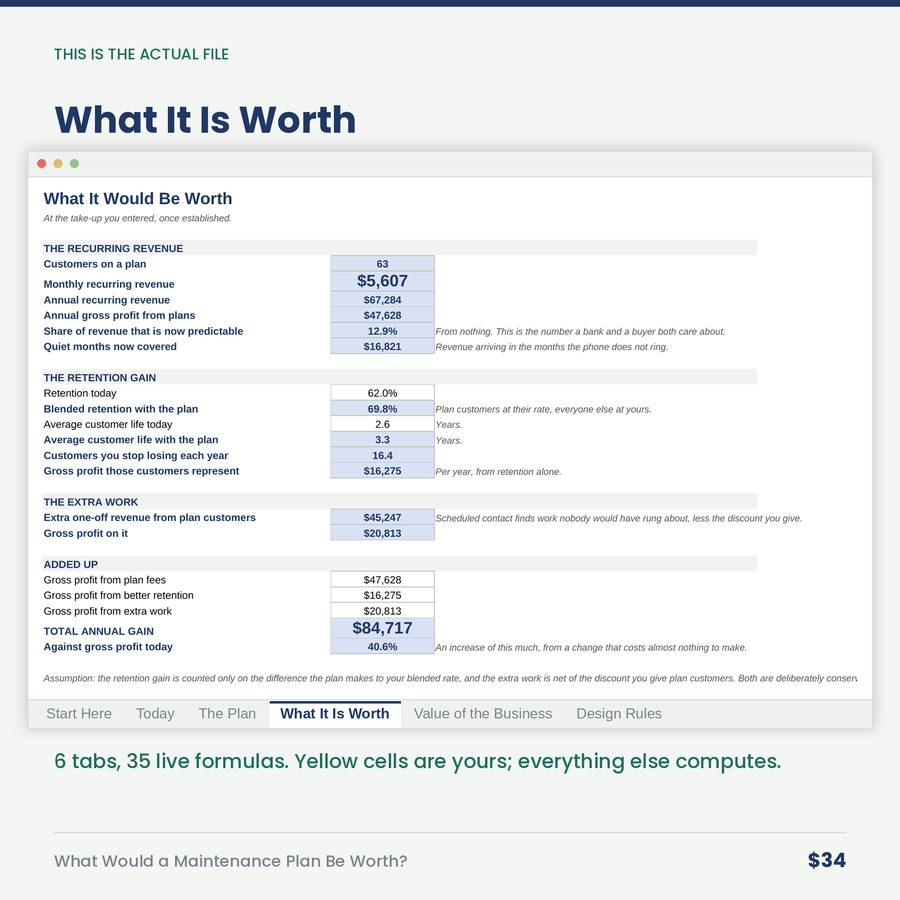
Customers stop leaving. A customer on a plan has a reason to stay and a scheduled reason to see you. In the example, retention goes from 62% to 69.8% — average customer life from 2.6 years to 3.3 — without one extra marketing dollar.
The business becomes worth more. Buyers pay a higher multiple for contracted revenue than for the same money earned job by job, because they're buying certainty rather than your reputation.
Here's what it's worth in the example.
A service business with 210 customers offers an $89/month plan that costs $26 to deliver. Thirty percent take it up.
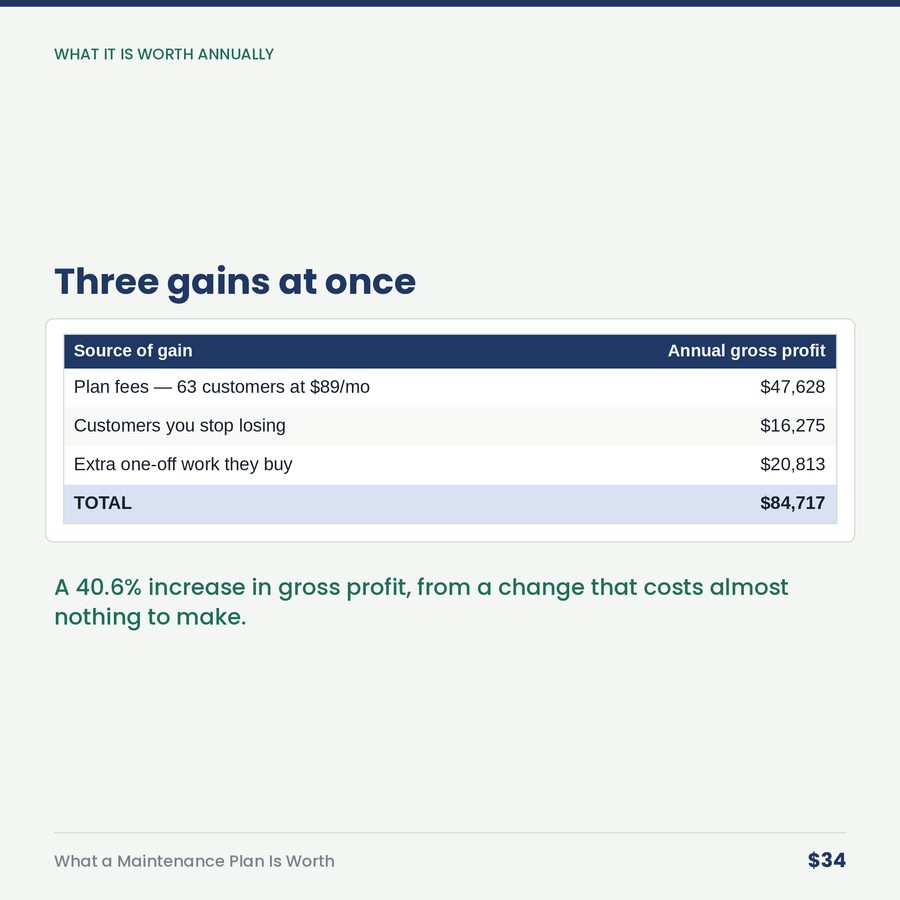
| Annual gross profit | |
|---|---|
| Plan fees | $47,628 |
| Customers you stop losing | $16,275 |
| Extra work plan customers buy | $20,813 |
| Total | $84,717 |
A 40.6% increase in gross profit — from a change that costs almost nothing to make.
And then the part almost nobody calculates.
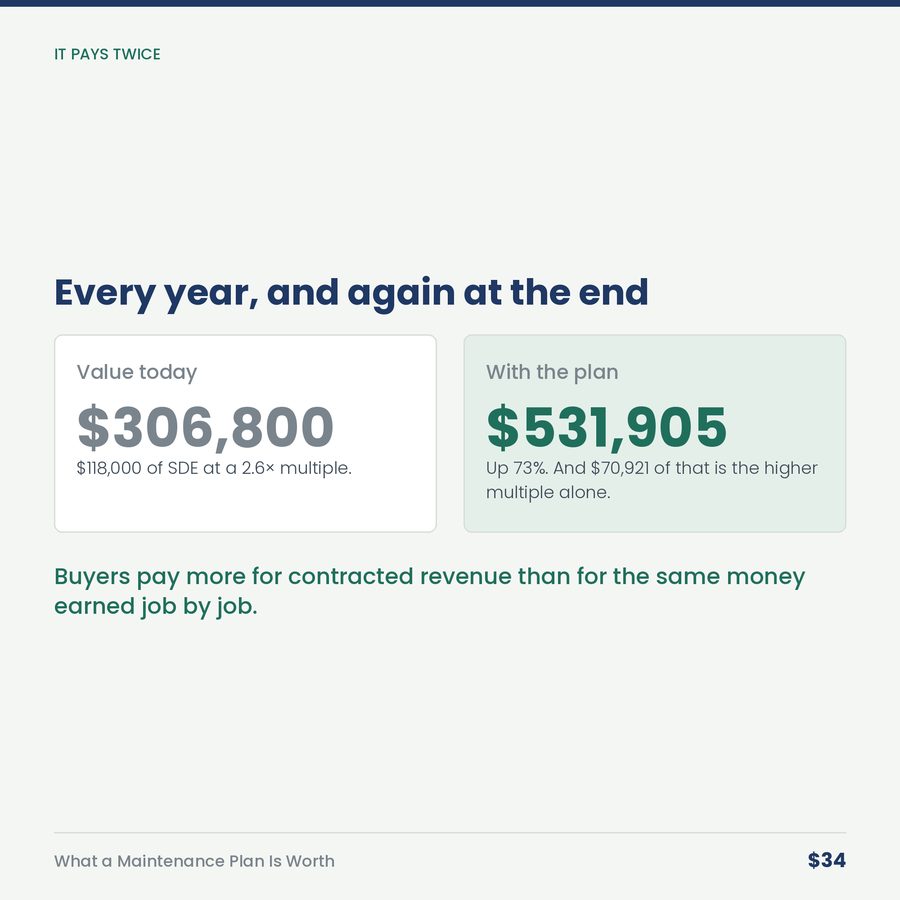
That same business is worth $118,000 of SDE at a 2.6× multiple — $306,800 today.
With the plan: $531,905. Up 73%.
And $70,921 of that increase comes purely from the higher multiple — not from earning more, but from earning it in a shape buyers pay more for. Same business. Better structure. More money on the day you sell.
A maintenance plan pays twice: every year, and again at the end.
The mistake almost everyone makes
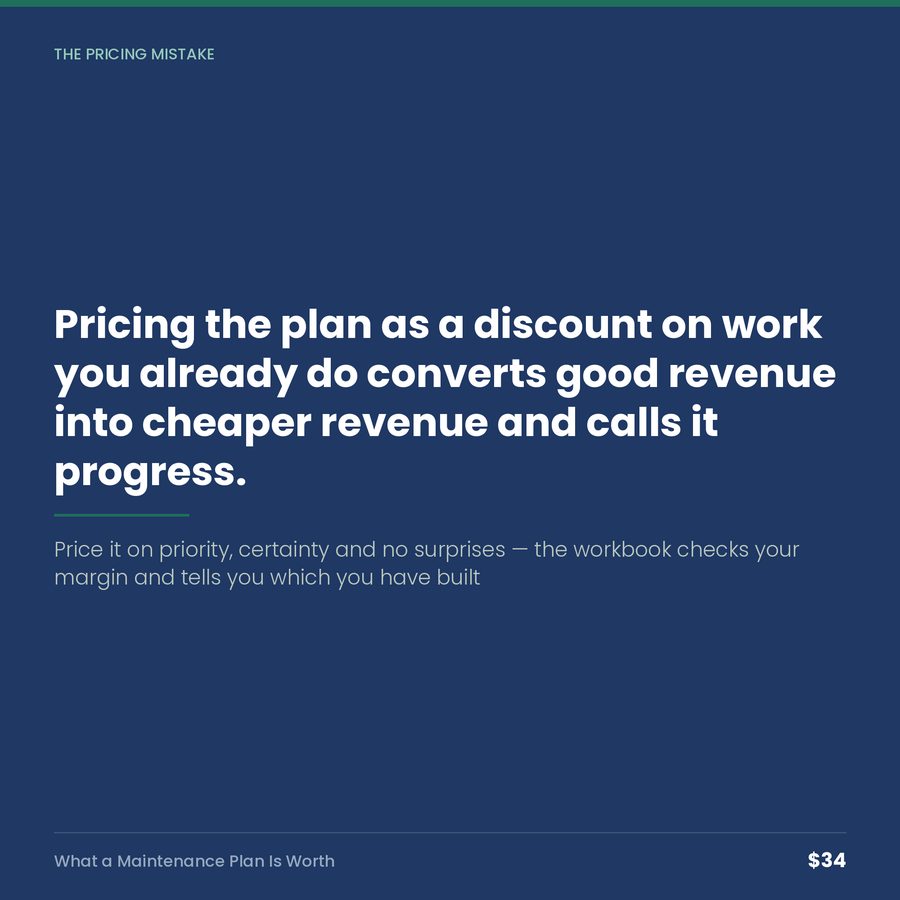
Pricing the plan as a discount on work you already do. That converts good revenue into cheaper revenue and calls it progress.
Price it on what it's worth to the customer — priority, certainty, no surprises, somebody who already knows their equipment. The workbook checks your margin against your ordinary work and tells you plainly whether you've built a plan or a discount scheme.
What never to include (the most expensive lessons, in advance)
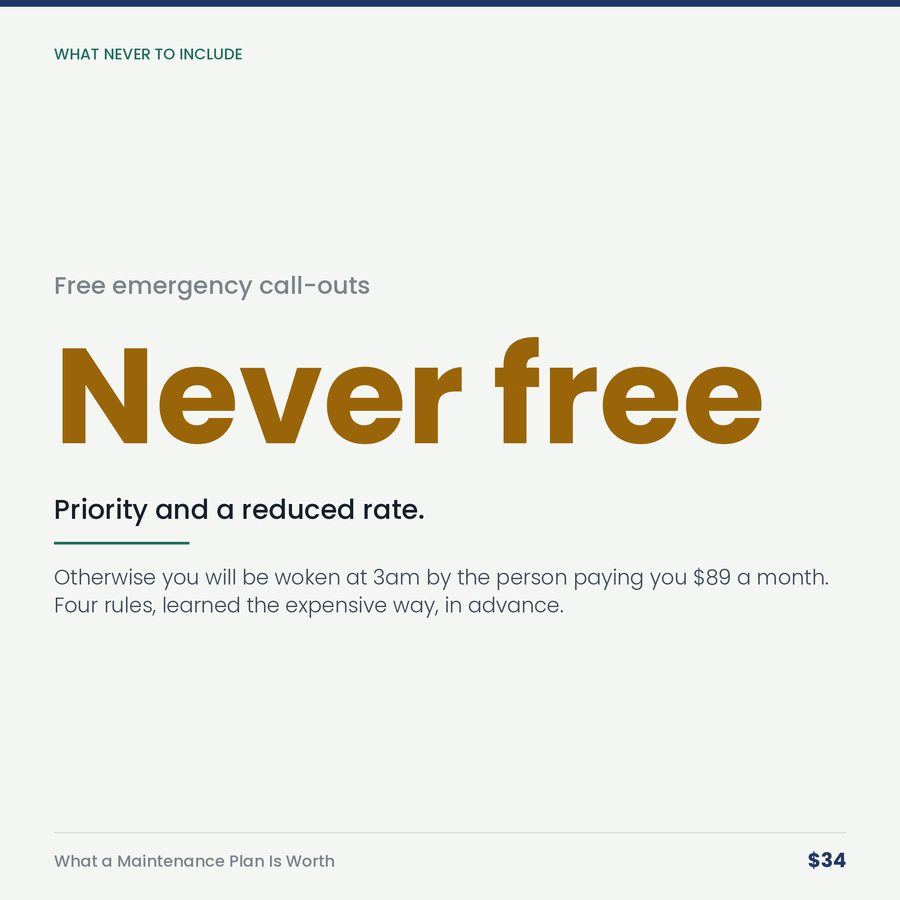
✗ Unlimited anything. One customer will discover the ceiling doesn't exist, and the plan will lose money on them forever. ✗ Free emergency call-outs. Include priority and a reduced rate — never free. Otherwise you'll be woken at 3am by the person paying you $89 a month. ✗ Parts above a stated value. Name the cap in writing. ✗ Work caused by neglect or by somebody else. Say so in the terms, kindly, before it happens.
And how to actually sell it
Offer it at the end of every completed job, while they're pleased with you. That's the moment, and it never comes back as strongly.
Say the sentence and stop: "Most customers on this size of system go on the plan — it's $89 a month and it covers the two visits plus priority. Want me to set it up?"
Ask every single customer. The take-up in the model assumes you do, and the commonest reason plans fail is that the owner only offers it to people they think will say yes.
Built for
HVAC, plumbing and electrical · lawn, landscape and pest control · pool and spa · equipment dealers and service shops · IT and managed services · any business that fixes, services or maintains something on a rhythm.
What you get
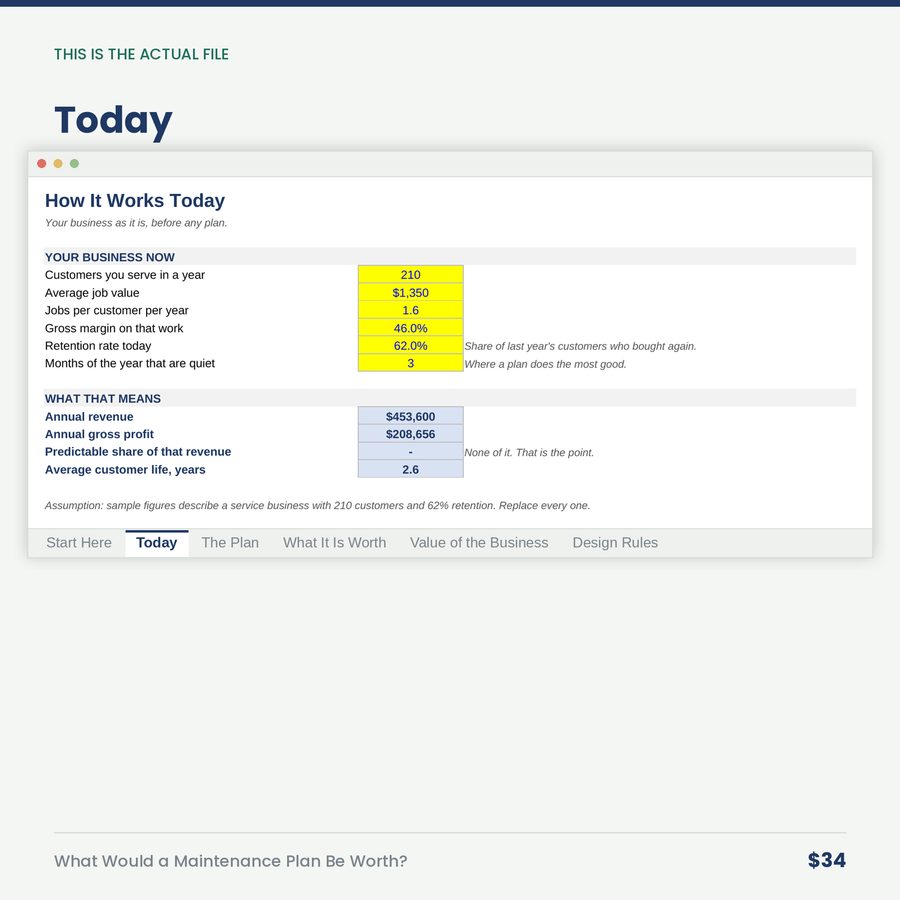
One .xlsx file, six tabs, instant download. Excel, Google Sheets, Apple Numbers, LibreOffice. No macros, no add-ins, no subscription.
A realistic 210-customer service business is loaded as a worked example. Type over it.
A look inside
More in Customers & Retention
Customer Retention Value Calculator
You count the customers you win. Do you count the ones you quietly lose?
$32
Which Customers Actually Make You Money
Your biggest customer is not necessarily your best one. One of them might be costing you money.
$34
Should I Take This Big Customer?
They'd be a third of your business. The margin is squeezed, the terms are net-60, and they can leave in 30 day
$29