Tools · Pricing & Quoting
Quote Follow-Up & Pipeline Tracker
You didn't lose that job to a cheaper bid. You lost it because nobody called.
$27 one-off
Buy — $27Quote-Follow-Up-and-Pipeline-Tracker.xlsx · 4 tabs, 278 live formulas, no macros
Instant download, nothing ships. Works in Excel, no subscription. If it does not do what you needed, tell me and I will make it right.
You sent the quote. They said they'd think about it. You didn't want to be pushy, so you waited. A week went by. Then two. By the time you thought about ringing, it felt awkward — so you didn't, and you told yourself they went with someone cheaper.
Usually they didn't. Usually they got busy, the quote slid down the inbox, and whoever called them first got the work.
Following up isn't pushy. It is the entire difference between a quote and a sale.
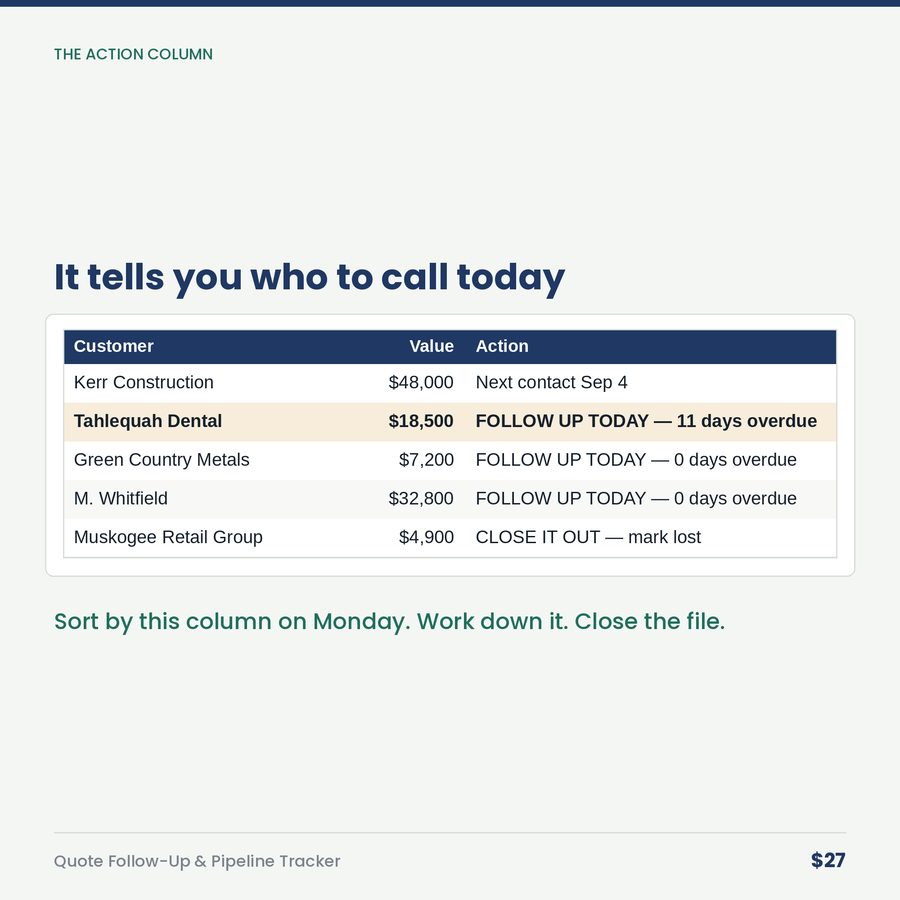
This tracker tells you who to call today.
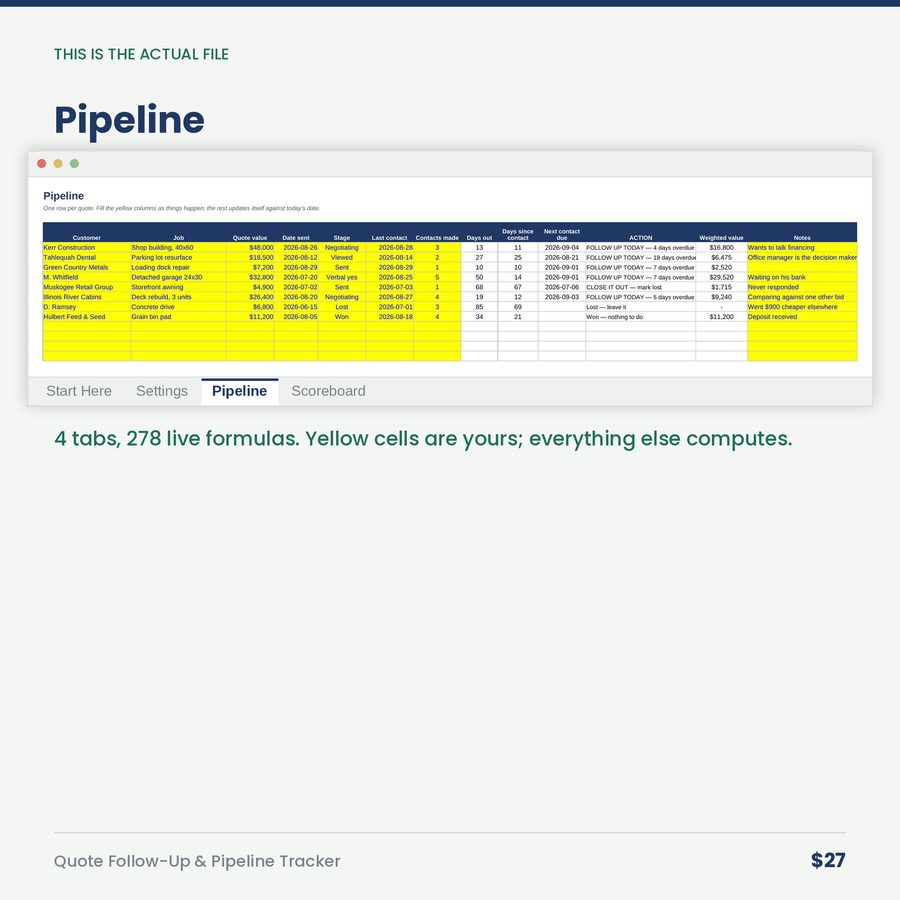
Enter each quote once: customer, job, value, date sent, stage, and when you last spoke. The workbook does the rest against today's date, and the Action column tells you plainly what to do:
- FOLLOW UP TODAY — 11 days overdue
- CLOSE IT OUT — mark lost
- STALE — different conversation needed
- Next contact Sep 4
Open the file Monday morning. Sort by that column. Work down it. Close the file. That's the habit, and it takes about ten minutes.
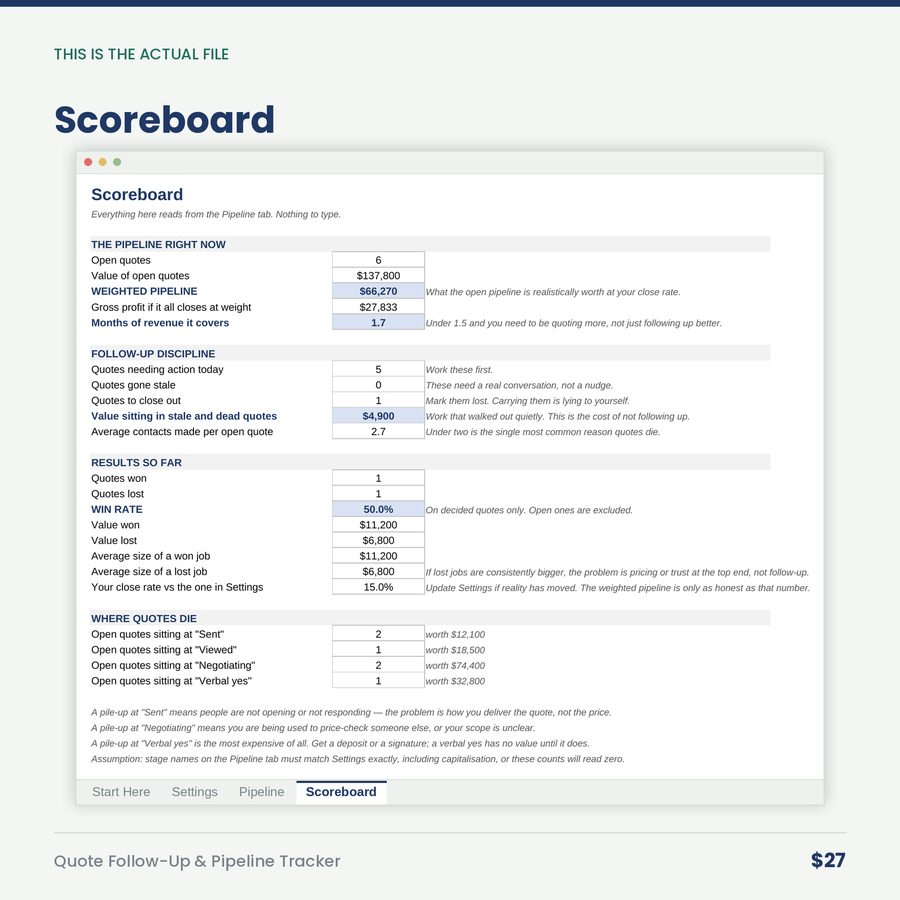
It also tells you what the pipeline is actually worth.
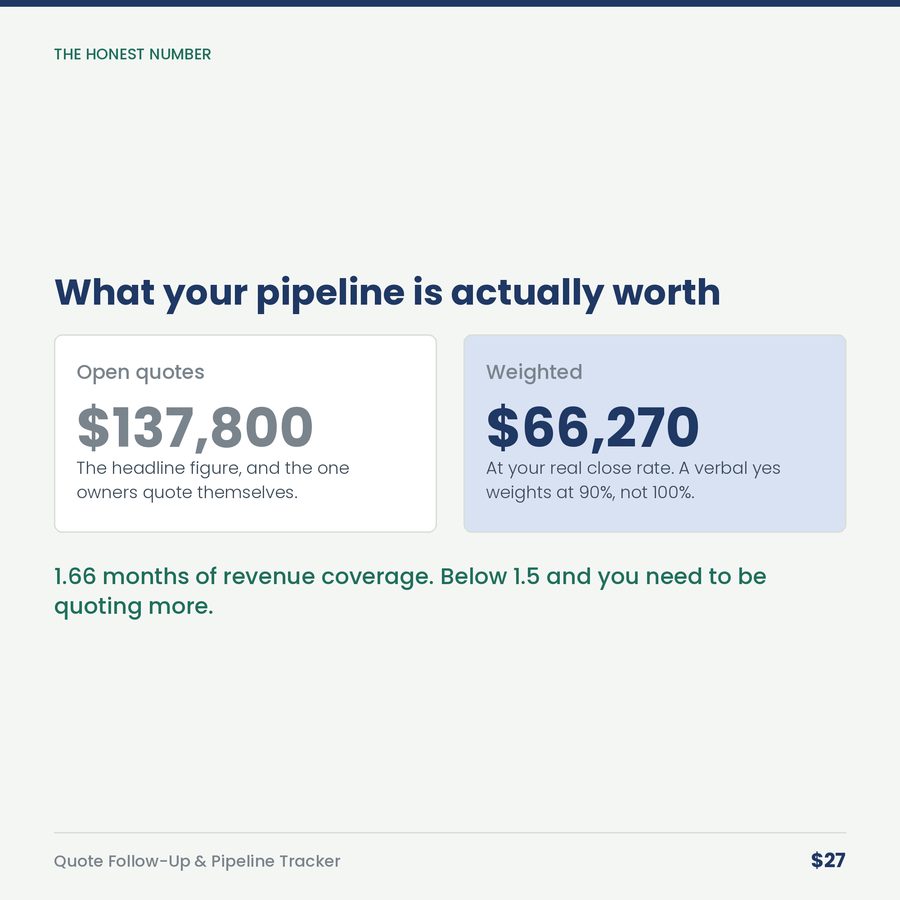
Not the headline number — the honest one. Open quotes weight at your real close rate. A verbal yes weights at 90%, not 100%, because a verbal yes is not a signature.
In the sample: $137,800 of open quotes, realistically worth $66,270 — 1.66 months of the revenue target. That single figure turns a list into a decision. Below about a month and a half of coverage, the problem isn't follow-up. It's that you aren't quoting enough work.
And it tells you where your quotes are dying.
A pile-up at Sent means people aren't opening or responding — the problem is how you deliver the quote, not the price. A pile-up at Negotiating means you're being used to price-check someone else, or your scope isn't clear. A pile-up at Verbal yes is the most expensive of all — get a deposit or a signature.
Plus the number most owners flinch at: average contacts made per open quote. Under two is the single most common reason quotes die.
The one rule that makes it work
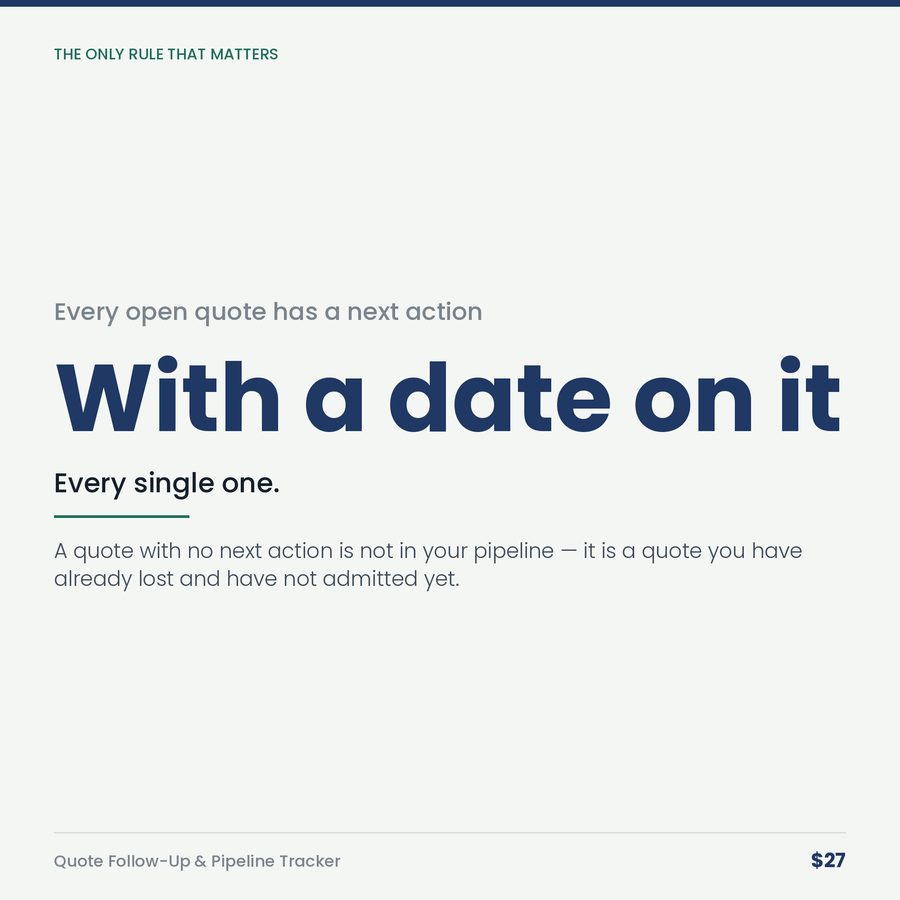
Every open quote has a next action with a date on it. Every single one. A quote with no next action isn't in your pipeline — it's a quote you've already lost and haven't admitted yet.
Mark the dead ones dead. A pipeline full of maybes is worse than a small honest one, because you can't tell from it whether you need to go find work this week.
Built for
Contractors and trades · landscaping, roofing, concrete, HVAC · agencies and consultancies · anyone who quotes work and has ever wondered what happened to a job they were sure they'd won.
What you get
One .xlsx file, four tabs, 50 quote rows, instant download. Excel, Google Sheets, Apple Numbers, LibreOffice. No macros, no add-ins, no subscription. Dates recalculate automatically every time you open it.
Eight realistic quotes are already loaded so you can see it working, then type over them. Stage names are yours to rename.
A look inside
More in Pricing & Quoting
Job Quoting & Bid Calculator
You are probably quoting off the wrong labor rate. Almost every contractor is.
$34
What a Discount Really Costs
Twenty percent off doesn't cost you twenty percent. At a 40% margin, it costs you half your profit on every sa
$29